Word Logic: Picture Riddles
Lunapp StudioTrivia
4.5598.00 Reviews
- Version
- 3.25.2
- Installs
- 1.00M
- Age Rating
- Everyone
Screenshots
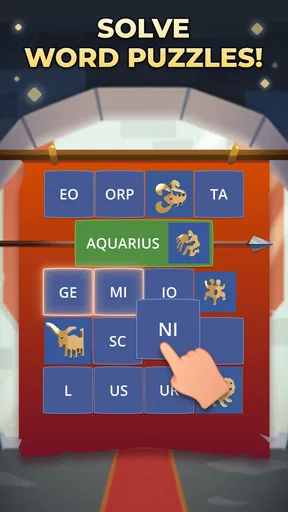
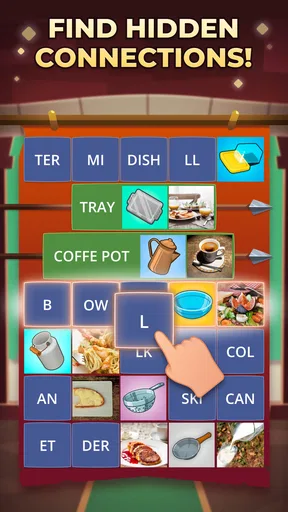
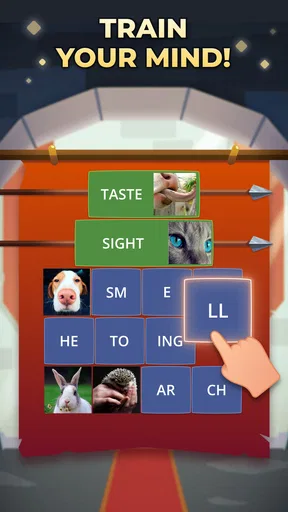
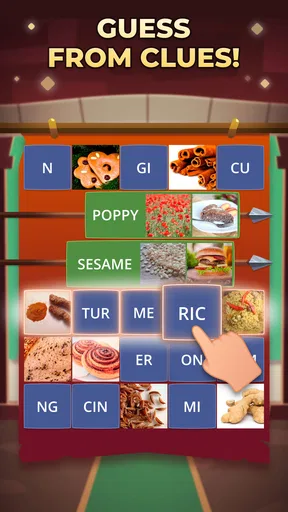
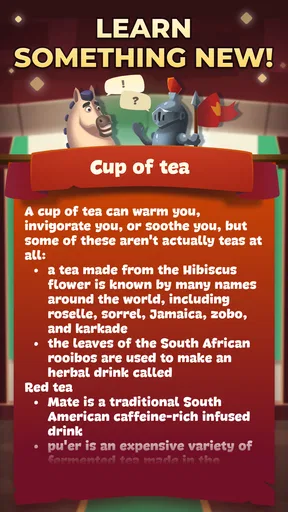
Our Review of Word Logic: Picture Riddles
 Analysis by Appyee
I spent time with Word Logic: Picture Riddles as a casual trivia game, and my first impression was that it understands a useful truth about mobile play: a good puzzle should be easy to start but not completely mindless. You look at a visual clue, think through the possible meaning, and try to find the word that connects the pieces. That makes it a natural choice for short breaks, quiet evenings, or anyone who enjoys word games without needing a long tutorial.
The game comes from Lunapp Studio and is free to download, with optional in-app purchases ranging from $1.99 to $79.99 per item. It is rated for Everyone, so it is broadly approachable for families and younger players, although the difficulty of a particular riddle can still vary from one stage to the next. It has built a sizeable audience, with more than a million installs and an average rating of 4.5 from roughly 32 thousand ratings. Those figures suggest that its simple format has found a dependable audience, but they do not remove the need to decide whether picture-based word puzzles are actually the kind of challenge you want.
What I considered before recommending it
When I judge a trivia game like this, I do not begin with the number of levels or the size of its audience. I first ask how clearly it communicates the task, how satisfying the answers feel, and whether the game works well in the small pockets of time when people usually play on a phone. I also look at whether the challenge comes from genuine word association or from obscure knowledge and guesswork.
That distinction matters here. This is not a traditional quiz built around capitals, dates, celebrities, or science facts. Its central challenge is interpretation. The pictures act as clues, and I have to combine what I see with familiar expressions, objects, ideas, or word relationships. Someone who enjoys lateral thinking may find that much more rewarding than selecting an answer from a list. Someone who prefers factual quizzes may instead feel that the solution is subjective or difficult to predict.
I also paid attention to how well it suits different play sessions. The store summary presents it as an offline game, and that is one of its most practical qualities. I can approach it as a small activity rather than something that demands a stable connection or a long uninterrupted session. That makes it suitable for a commute, a waiting room, or a few minutes before bed. The trade-off is that a short-session design can feel repetitive if you want a richer progression system or a more substantial story.
The kind of thinking the puzzles encourage
The most useful way to play is to treat every image as a clue rather than as an answer. I try to name the obvious object first, then consider related actions, descriptions, sounds, and common phrases. If two pictures appear to point toward a shared idea, I avoid locking myself into the literal interpretation of either one. This small change in approach makes the game feel less like guessing and more like solving.
A practical technique is to keep several possible words in mind instead of typing the first association immediately. For example, an image may suggest a thing, a verb, or an adjective, and the intended answer may depend on how the pictures combine. I found that stepping back for a few seconds often helped more than repeatedly entering random guesses. The game rewards flexible thinking, so rushing can make an easy riddle feel harder than it is.
This is also where the experience becomes more personal than a standard trivia app. There is no single store of facts that guarantees success. A player familiar with idioms and everyday wordplay may move quickly, while a strong general-knowledge player may still need time to see the intended connection. I like that difference, but it also means the game is not equally satisfying for every kind of quiz fan.
Why the picture format works in short sessions
Visual clues reduce the amount of reading needed before each attempt. I can open the game, understand the basic task quickly, and begin solving without studying a rules page. That low entry barrier is important on a phone, where interruptions are common. If I leave after one puzzle, I do not feel that I have abandoned a complex campaign.
The format is especially useful for players who want a gentle mental warm-up. I can use a few riddles to shift attention away from work, or play with another person by showing the clue and discussing possible answers. In that situation, the game becomes a conversation starter rather than a solitary score chase. It is also a reasonable choice for families because the content rating is Everyone and the basic idea is easy to explain.
Still, visual simplicity should not be confused with universal accessibility. A picture-based clue can depend on recognizing what an image is meant to represent, and that may be less comfortable for players who prefer text-only questions. If you find ambiguous images frustrating, the same feature that makes the game approachable may become its main source of irritation.
Where Word Logic: Picture Riddles wins
The strongest part of the experience is its narrow focus. Instead of mixing several unrelated quiz modes, it builds the session around picture-led word reasoning. I always know what kind of mental task I am choosing, and that consistency makes it easier to return to the game when I want a particular type of break.
Compared with a conventional multiple-choice trivia app, the game gives me more ownership of the answer. I am not simply recognizing a fact from four options. I have to form a possibility, test it, and decide whether the clue supports it. That extra step creates a better sense of discovery when I solve a difficult riddle without help.
It also works better than many word games for people who do not want a strict timer or a competitive atmosphere. I can think at my own pace and use the puzzle as a quiet activity. For a parent looking for something that can be played alongside a child, or for an adult who wants a screen break that still involves some reasoning, this relaxed structure is a genuine advantage.
A useful way to play with another person
One of my favorite use cases is treating a puzzle as a shared prompt. Instead of handing the phone back and forth after every guess, one person describes the possible meanings of the images while the other proposes words. This turns a simple mobile game into a lightweight family or friend activity, and it reduces the pressure of being the only person responsible for solving a stubborn clue.
There is a subtle benefit to this approach: different players notice different layers in the same image. One person may focus on the object itself, while another thinks of an expression or action connected to it. That makes the game a good fit for collaborative play, even though its basic structure is designed for individual solving. It is less suitable for a group that wants a formal multiplayer competition, but it works well as an informal puzzle conversation.
Offline play changes when it is most useful
The offline design is more than a convenience for people with unreliable service. It changes where I can realistically use the game. I can keep it in mind for travel, airplane mode, rural areas, or places where I would rather not spend time loading online content. It also makes the game feel more self-contained than trivia products that depend heavily on live questions, online rankings, or constant updates.
That strength comes with a limitation. Players who enjoy fresh daily questions, live events, or an active competitive community may find an offline puzzle collection less exciting over time. The choice depends on whether you value dependable access more than changing content. For me, the offline angle is a clear reason to keep it installed, especially when I want a game that does not require planning around connectivity.
How I handled difficult riddles
My best results came from using a three-step routine. First, I described every picture in plain language without trying to solve the whole clue. Second, I listed alternate meanings, including actions and familiar phrases. Third, I looked for the shortest word that could connect the images naturally. This prevents the common mistake of inventing an elaborate answer when a simple association is intended.
I also recommend taking a break before spending resources on a hint. A short pause can reveal a connection that was hidden by tunnel vision, and returning later is often more effective than making several random attempts. If you play with children, asking them what each picture could mean can be surprisingly helpful; younger players may notice a literal connection that an adult has overcomplicated.
These are small habits, but they make the game more enjoyable because they turn frustration into a method. The challenge is not only whether I know the answer. It is whether I am looking at the clue from the right angle.
Where another type of game may fit better
I would not recommend this as the first choice for someone who wants a broad knowledge test. If your ideal trivia session involves geography, history, sports, or current events, a conventional quiz app will probably feel more precise and more informative. Those alternatives usually make it clear whether an answer is objectively right, while picture riddles can depend on interpretation and familiarity with common word associations.
It may also be the wrong fit for players who need a strong sense of long-term progression. This game is easy to understand because it stays focused, but that focus can feel limited if you are looking for character development, a story, elaborate unlocks, or a competitive ladder. A crossword or word-building game may be better if you want to work with letter placement, vocabulary depth, or a more systematic puzzle board.
There is another important distinction between this and visual puzzle games based on finding differences or identifying objects. Here, seeing the image is only the beginning. The intended solution often depends on what the image suggests linguistically. If you prefer direct visual observation, a hidden-object or spot-the-difference game may offer a cleaner relationship between what you see and what you must do.
Who should skip it
I would skip it if ambiguous clues make you feel that the game is arguing with you. Some players enjoy exploring several interpretations, while others want a single transparent rule and a clearly measurable answer. Neither preference is wrong, but this format leans toward association and wordplay rather than strict deduction.
I would also look elsewhere if you need a game that teaches a specific subject. Although solving riddles can exercise attention and flexible thinking, it is not a replacement for a language course, a vocabulary curriculum, or a fact-based educational quiz. Its value is in the act of connecting ideas, not in following a structured lesson.
Finally, players who strongly dislike optional purchases should decide in advance how they want to handle them. The game is free, but the presence of purchasable items means it is worth checking the device’s spending controls before handing it to a child. I prefer to treat the free experience as the starting point and avoid paying simply to rush through a puzzle that may become solvable after a break.
The practical cost of changing to or from it
Trying it is relatively easy because the entry price is free and the minimum operating-system requirement is Android 7.1. The current version is 3.25.2, so I would first check that an older phone meets the software requirement before expecting a smooth installation. The game is also available as a mobile title rather than a desktop-style puzzle experience, which means the main adjustment is learning to think in short, touch-based sessions.
The real cost of switching is not money; it is expectation. Someone moving from a general trivia app must accept that success will depend less on stored knowledge and more on interpreting visual hints. Someone moving from a crossword must accept less control over the exact letters and more emphasis on the relationship between images. Once I understood that difference, I stopped judging each puzzle by the standards of another genre.
Optional purchases deserve a measured approach. The listed price range extends from $1.99 to $79.99 per item, so I would not recommend making a purchase casually, particularly if the game is being used by a child. I would play enough free content to decide whether the clue style genuinely suits me. If hints or other extras become necessary for enjoyment rather than occasional assistance, that is a sign that a different puzzle format may offer better value.
For a person replacing another app, I would keep both for different purposes rather than expecting one to do everything. This game is strongest when I want visual word association offline. A fact quiz is stronger when I want to learn or test information. A crossword is stronger when I want a structured vocabulary challenge. Keeping that division clear avoids disappointment and gives each type of game a useful place.
Questions I would answer before installing
If you are wondering whether it can be played without an internet connection, the store summary specifically presents offline play as part of the experience. That makes it a sensible option for travel and disconnected moments. I would still install and open it before a trip rather than waiting until the last minute, simply because every app is easier to troubleshoot at home than in transit.
If you are asking whether it is suitable for a child, the Everyone content rating makes it broadly appropriate from an age-rating perspective. I would nevertheless supervise younger players around optional purchases and help them understand that a difficult clue is not a reason to make repeated guesses or spend money immediately. Solving together is often more valuable than handing over a hint.
If you want to know whether it is genuinely trivia, the answer depends on how you define the word. It sits in the trivia family, but it is not a fact-recall test. Think of it as visual word logic with a quiz-like structure. That description is more useful than expecting questions about general knowledge.
If you are concerned about whether it will remain interesting, I would base the decision on your tolerance for repeated word-association challenges. The focused format is its identity, not a temporary tutorial. People who enjoy this kind of clue can return often, while players seeking constant novelty may eventually prefer an app with several puzzle modes or live content.
If you are deciding whether to pay, my advice is simple: do not begin with a purchase. Use the free version to test how you react to the clues, especially when the answer is not immediately obvious. Only consider an optional item if you already enjoy the core loop and understand exactly what problem it solves for you.
My recommendation for the right player
After playing it with those criteria in mind, I see Word Logic: Picture Riddles as a focused, approachable choice for people who like visual clues, word association, and offline puzzle sessions. Its best quality is not complexity. It is the way a small set of images can turn into a surprisingly satisfying answer when I stop looking literally and start thinking about language.
I recommend it to casual trivia fans who want something calmer than a timed quiz, families who enjoy solving clues together, and travelers who want a game that remains useful without a connection. I also think it suits anyone who likes to keep a puzzle available for short breaks rather than committing to a long gaming session.
I would point a dedicated fact-quiz player, a competitive leaderboard fan, or someone who dislikes ambiguous wordplay toward another category instead. A crossword, knowledge quiz, or visual observation game may match those preferences more closely. The important thing is not whether this game is universally better; it is whether its particular kind of reasoning is the one you want today.
Lunapp Studio has kept the concept clear enough that I can recommend trying it without a complicated commitment. Just approach it as a picture-based word challenge, use pauses and alternate meanings instead of random guessing, and treat purchases cautiously. With that mindset, the free download offers a pleasant way to exercise flexible thinking in small doses. My final verdict: a worthwhile install for relaxed visual riddles, but not a substitute for every kind of trivia or word game.
Verdict
Strengths of Word Logic: Picture Riddles
- Hundreds of picture-based puzzles offer plenty of short play sessions.
- Simple controls make the game easy for both children and adults.
- Hints can help players progress when a clue feels especially difficult.
- Puzzle variety keeps the guessing experience from feeling too repetitive.
- Works well as a casual offline game for travel or quick breaks.
Limitations of Word Logic: Picture Riddles
- Some answers rely on wordplay that may feel unclear to non-native speakers.
- Hint systems may be limited, making difficult puzzles frustrating.
- Repeated visual themes can reduce the challenge for experienced players.
- Ads may interrupt the flow between puzzles or after completing rounds.
- Progression can feel slow if new content is locked behind extra requirements.
Similar Picks in This Category
View All
Millionaire 2026 Quiz & Trivia
Quiz & Trivia Games by Submarine Apps4.5

Brain Test 2: Tricky Stories
Unico Studio4.7

Trivia Crack: Brain Quiz Games
etermax4.4

QuizzLand. Quiz & Trivia game
Quiz & Trivia Games by Mno Go Apps4.8

Brain Test: Tricky Puzzles
Unico Studio4.7

Logo Quiz
bubble quiz games4.5
Frequently Asked Questions
What is Word Logic: Picture Riddles?
Word Logic: Picture Riddles is a casual puzzle game that challenges you to identify words, phrases, or ideas represented by images. Each level combines visual clues with wordplay, asking you to look beyond the obvious answer. It is designed for short play sessions, making it suitable for relaxing at home, traveling, or enjoying a quick mental challenge.
How does the gameplay work in Word Logic: Picture Riddles?
The game presents one or more pictures and asks you to determine the word or expression connecting them. You normally enter your answer using the available letters, with correct solutions unlocking additional puzzles. Some clues are straightforward, while others rely on associations, synonyms, or creative interpretation, so careful observation and flexible thinking are important as the difficulty increases.
Is Word Logic: Picture Riddles free to download and play?
Word Logic: Picture Riddles can generally be downloaded for free, but the experience may include optional in-app purchases, advertising, or both. Ads can appear between puzzles or when using certain assistance features, while purchases may provide hints or remove advertising. Before downloading, check the current store listing for the exact pricing and payment details on your device.
Does Word Logic: Picture Riddles require an internet connection?
An internet connection may not be necessary for every part of Word Logic: Picture Riddles, particularly if the required puzzle content has already been loaded. However, connectivity can be needed for advertisements, purchases, updates, analytics, or additional content. Offline availability may vary by version, so it is best to test the game after installation rather than assume every feature works without internet access.
Is Word Logic: Picture Riddles suitable for children and families?
The picture-based format and simple controls make Word Logic: Picture Riddles accessible to many ages, and it can be enjoyable as a family word game. Nevertheless, parents should review the app’s age rating, advertising, in-app purchase options, and privacy information before allowing children to play. Some answers may require advanced vocabulary or cultural knowledge, especially in later levels.
Play our best games!


